The inference layer for robotics
Your models.
In the real world.
Run the models that move the physical world.
Fenon is inference infrastructure for robotics. Connect cloud intelligence to physical machines—without making infrastructure your core work.
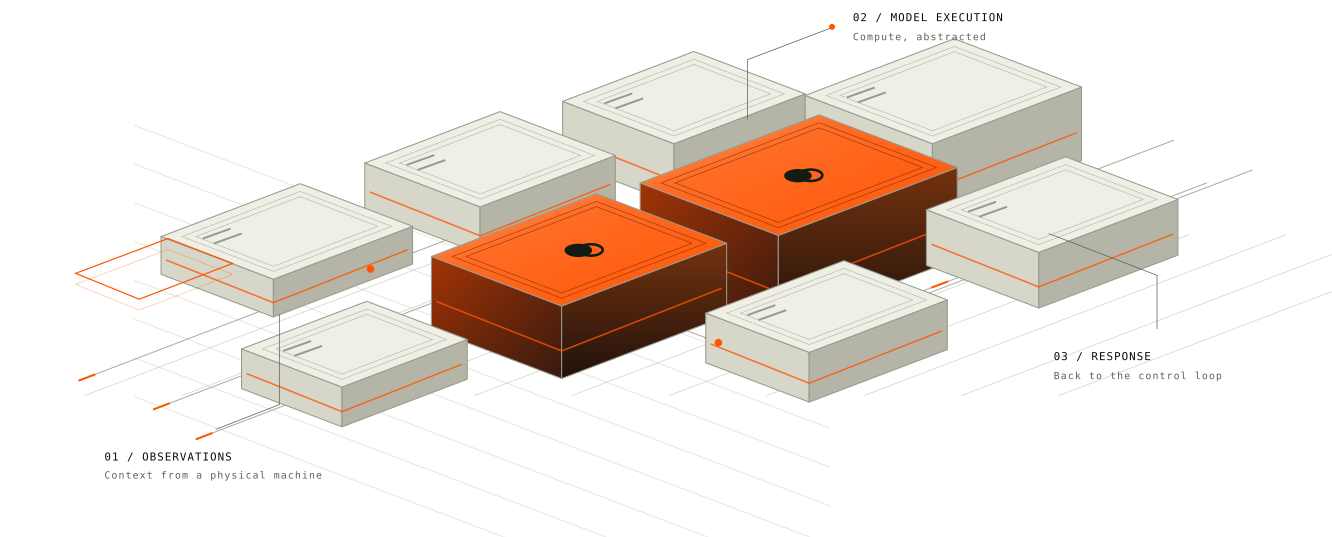
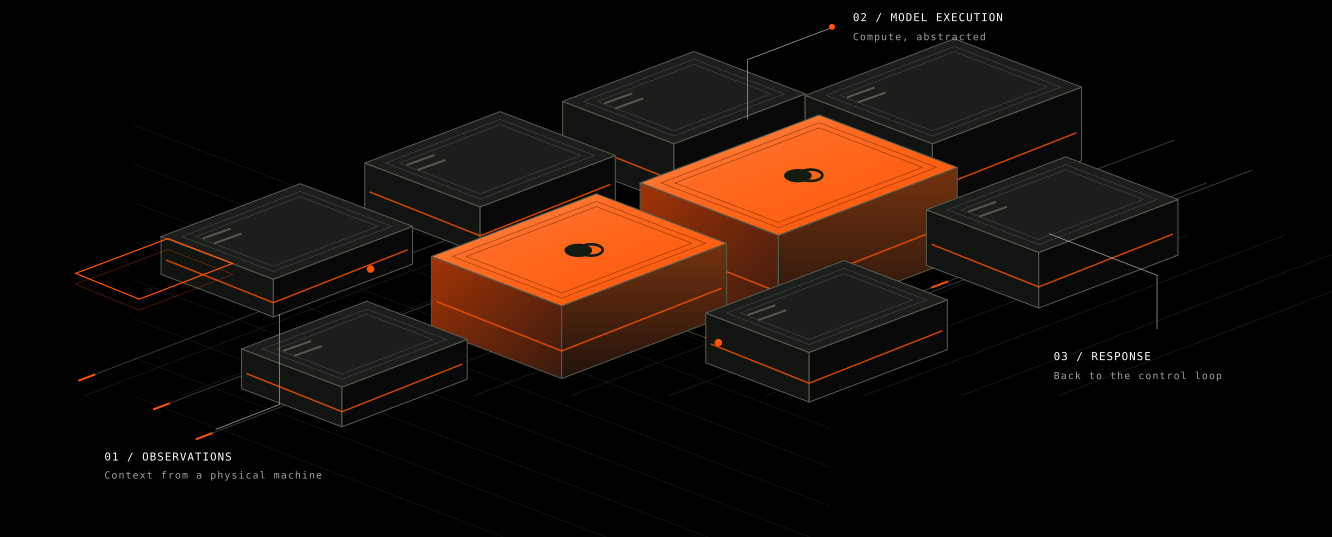
Observation in → model execution → response out
Conceptual architecture · not live telemetry
Built around the machine
The platform
The cloud layer behind
physical intelligence.
Your model is one part of the system. Fenon focuses on the inference layer that connects it to the machine.
Model-first development
Bring the intelligence.
Not the infrastructure work.
Define the model, its inputs and its runtime. Keep the integration visible and the deployment details out of the way.
# Integration conceptname: manipulation-policymodel: your-team/checkpointinput: observationoutput: action_proposalruntime: cloudIllustrative configuration, not a released SDK
A connected system
An execution layer.
Not another model catalogue.
Observations go in. Model responses come back. Design the intelligence around your robot’s own control loop.
- RobotObserve
- FenonInfer
- ControlRespond
From experiment to deployment
A single robot is the start.
The inference layer shouldn’t be the limit.
Build around changing workloads: the models you run, the observations they receive, and the machines that depend on them.
- Model version
- Request context
- Runtime needs
Workload shape
Observation window →
Workloads
Different models.
One inference layer.
Robotics intelligence spans more than perception. Organize the models around the work your machine needs to do.
Give observations
some understanding.
Connect multimodal reasoning to the robot’s context. Interpret what is happening, reason about the task, and propose what should happen next.
See the inference loopModel workload / concept
reasoning-model
Reason about what
could happen next.
Use world-model inference to explore possible transitions. Bring state, history and candidate actions into a common representation.
See the inference loopModel workload / concept
world-model
Turn context into
an action proposal.
Connect observations to policy inference. Return action proposals to your robot’s controller for its own validation and execution.
See the inference loopModel workload / concept
policy-model
Model to machine
Keep the integration
as clear as the intent.
A deliberate boundary between cloud inference and the robot. The response informs the machine; local control remains local.
The intelligence runs in the cloud.
The robot owns the action.
- 01
Package the observation.
Send the task and the context your model needs.
- 02
Run the model.
Request an inference from the selected checkpoint.
- 03
Validate the response.
Apply your local checks before an action is executed.
# Pseudocode — your robot, your modelobservation = robot.observe()response = inference.run( model="your-team/policy", input=observation,)if controller.accepts(response): controller.execute(response)Cloud inference → local validation → execution
Conceptual integration, not executable SDK documentation.
Control requirements depend on your robot and deployment.
Follow the work
See the loop.
Not just the request.
Make room for the details that matter: the observation, model version, response, and the boundary with your controller.
Inference lifecycle / example trace
- 01ObservationContext prepared
- 02Model executionResponse returned
- 03Local validationController checks
- 04Next actionMachine responds
Illustrative sequence. Bar lengths show process progression, not measured latency. No requests are being sent.
Engineering notes
Inside the inference layer.
Space for the architectures, experiments and decisions behind robotics inference.
From the model to the real world
Build what
moves next.
Tell us what you’re building, which models you run, and what your robot needs from its inference layer.
Talk to Fenon